Donald Richie’s The Inland Sea is widely regarded as one of the classics of post-war writing on Japan. It’s the account of a trip Richie took, alone, across the various islands of the Seto Naikai, the inland sea of the title. It’s a bold book, idiosyncratic and opinionated (and unashamedly adult), unafraid to cast modern Japan and America into the flames and, like all the best travel writing, it tells us almost as much about the author as about the location in which it’s set.

The first stop was at Tangajima, a source of stone since the time Himeji castle was built. The profile of the island was bare rock, mining stripping it of the bamboo and trees that covered most of most of the other islands. There were maybe 10 buildings along a small strip of coast, with the centre of the water roped off for some kids swimming. From there we went around the back of Ieshima, to Bozejima. Boze was a more developed port, than Tangajima, a school perched up on the top of the hill, then a series of houses tumbling down to the quay, lined with boats.

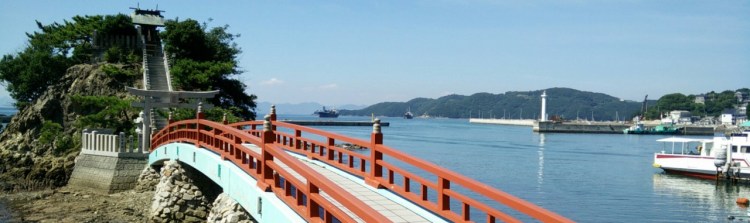
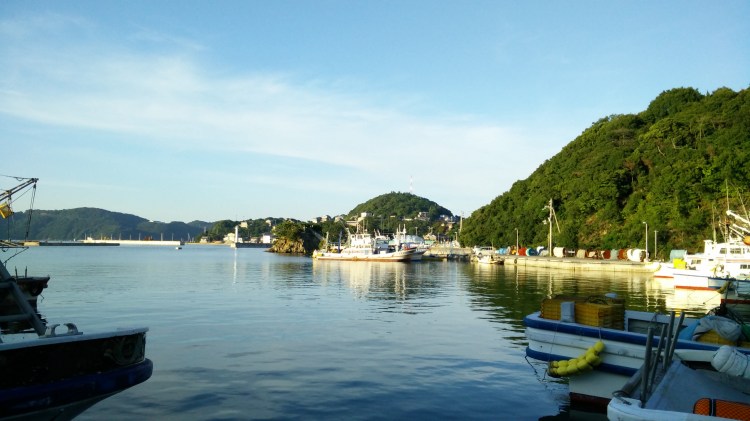
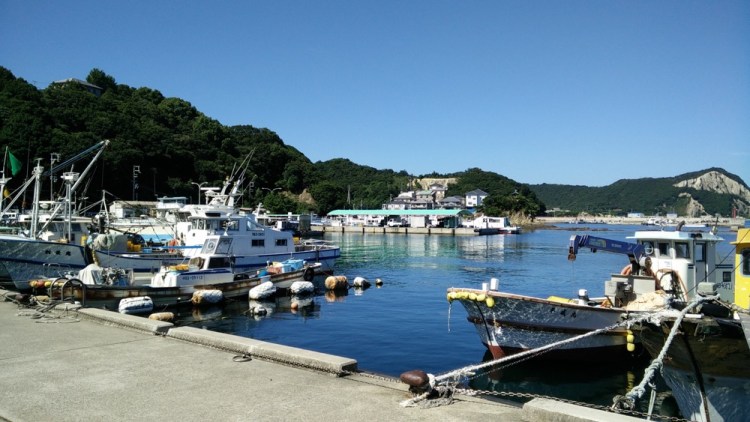
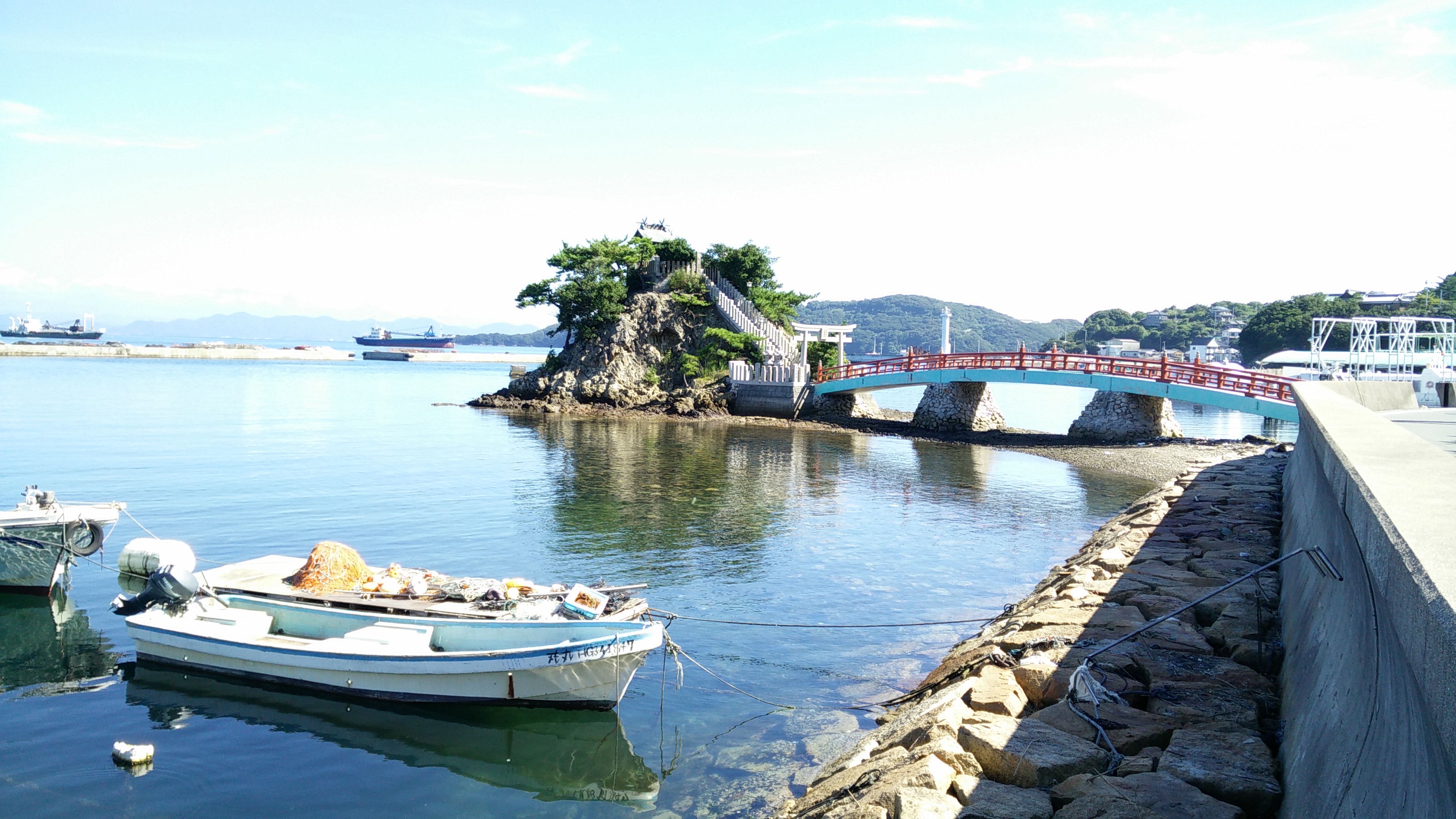
As we got off, the basketballers lined up to shout a thank-you to the ferry men, then turned and jumped on the back of various waiting mopeds. As they headed off home, we walked across the port towards our ryokan. The port was hot and dry, with little shade, and little going on. There were boats lined up in the harbour, and two shrines built out into the water, one biggish, the other small and reached across a curving red bridge. We walked past it, and the boats, the water mixed with various bits of flotsam and the smell of the sea strong in places.
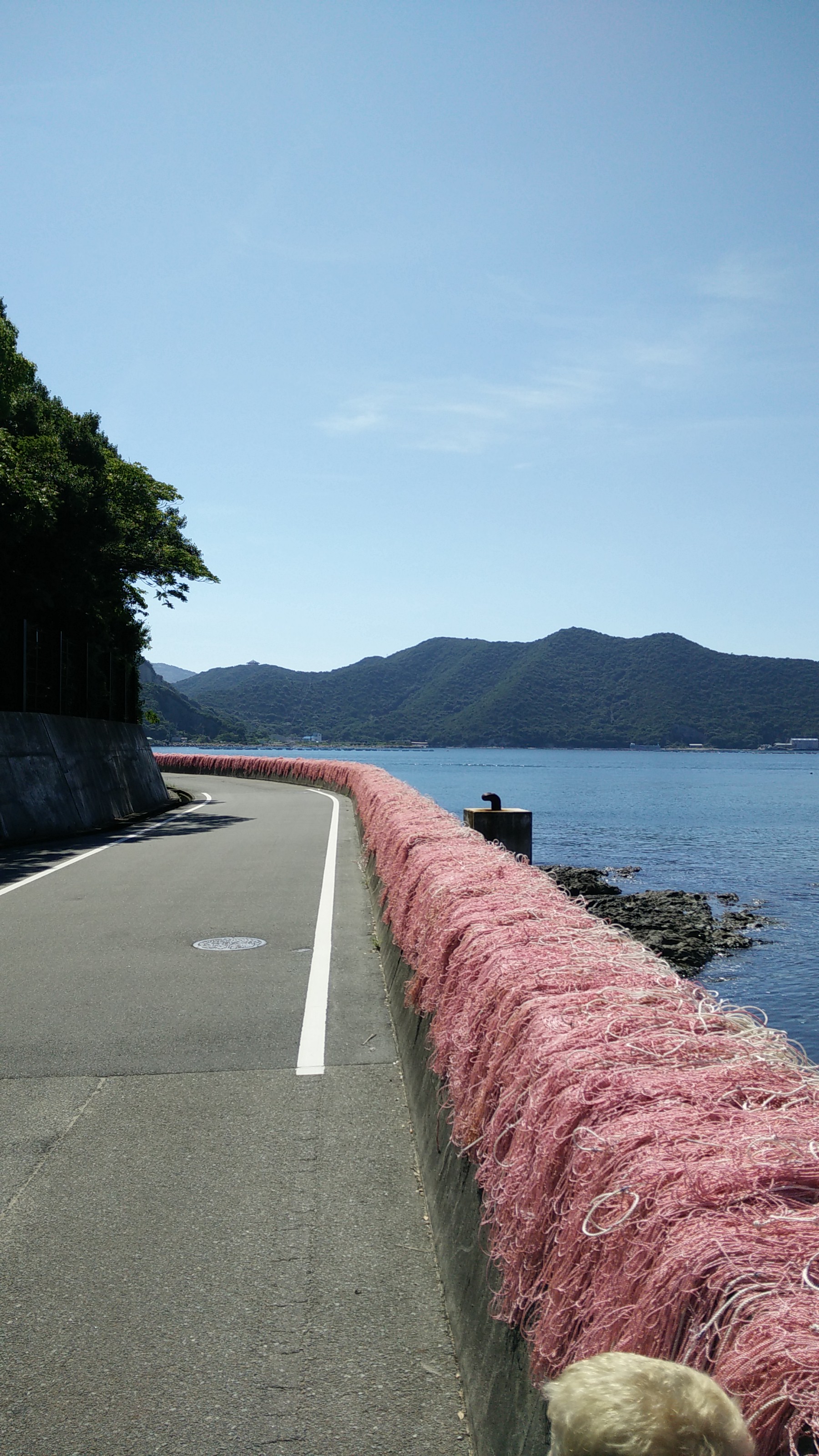
In the inn, our room was classical Japanese style: tatami floors, with a low table in the middle, bearing a flask of hot water, a cylinder of green tea, and four cups. There was a small room, separable from the main space by sliding doors, and then a balcony that looked out across the sea. The sea was still calm, and there was little sign of anyone doing much, beyond the odd scooter passing by. All along the road the sea walls were hung with pink nets. A short distance away, Ieshima, and another of the islands, Nishijima were visible, and then off in the distance, hazy watercolour washes of the hills of the mainland.
After we sorted out a small bag, we headed out. A short discussion with the ryokan owner established that the boad to Ieshima was due in 10 minutes, but that it left you on the wrong side of the island and that a 30 minute walk over the top was needed to make it to the town and the festival. We walked towards the boat, then had second thoughts and headed back the other way, towards a beach.


“The streets of the town, so narrow that my arms brushed either side, stretched past open doors, open windows, through which I saw families sitting at dinner; mothers in kitchens busy with fish, pickles, rice… At one turn I blundered directly into someone’s house, was met with smiles and laughter, told to take the next crossing but one, then turn right until I reached the carpenter shop, then past the saké store, turn left when I saw the place where ice-candy was sold, then right to where the children had chalked a large picture of a cat, then straight on, and I couldn’t miss the sea road.”
It would be easy to be cynical about Richie’s hunt for the real Japanese in the islands of the inland sea. Certainly his self-confessed romanticism seems a little naiive and simplistic sitting in the twenty first century. Nevertheless, for all of the greater complexity in our understandings of the modern, there’s still something recognisable in the sense of loss that Richie feels in the city, and the desire to seek what he’s lost by going out where the ‘levelling out’ of modernity has penetrated less far. In a week in which I’ve visited a sento, I certainly am not immune from the lure of the myths of older Japanese ways of doing things.
When Richie undertook the journey, it was certainly a bizarre idea that not many others would think of doing, but now many of the islands in the inland sea have reinvented themselves as destinations for short trips, with various different attractions. Staying in a local inn, a Ryokan, is a part of that vision, rather than a large, modern hotel which seeks to create a uniform experience, unconnected to a sense of the inland sea as a place with its own history (something that Richie saw encroaching, on his trip).
We ate dinner, in the best seats in the dining room, looking out across the sea towards the sunset, and in the prime position to watch the television, which was showing a two hour special on the origins and consequences of the Second World War. When the only other early diner left, I got them to turn it off, and we enjoyed our meal of raw fish and boiled fish and shell fish and fried fish, tempura, rice, pickles and soup, in a little more peace. Back upstairs, at 9:30, we we able to watch the fireworks from the festival, away over the water and the crest of the middle of Ieshima.
The next morning was hot again, already by the time we left. We skipped the 9am boat, and decided to wait for the 10am in the shade of some fishing related structure on the quayside. We had headed towards the first, larger shrine, but it was three sides around the bay to get to the spit that led out to the shrine, and even a passing local advised us that it was too hot to try. So we sat, looking out to sea with a panting dog for company, until the boat came in. It was a little sad to be heading back the way we had come, rather than making it the start of a longer journey (although I don’t think there are regular boats anywhere other than back to Himeji from either Ieshima or Boze), but maybe that’s something for another time.
 Fireflies
Reblogged this on Zeelite.
LikeLike